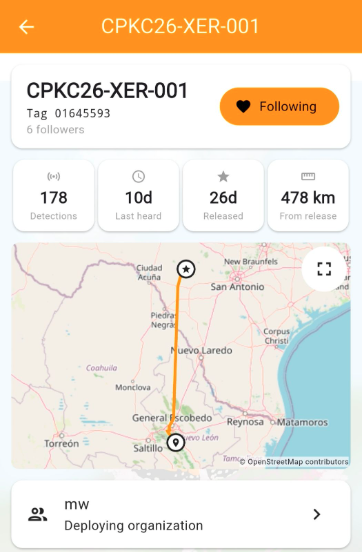
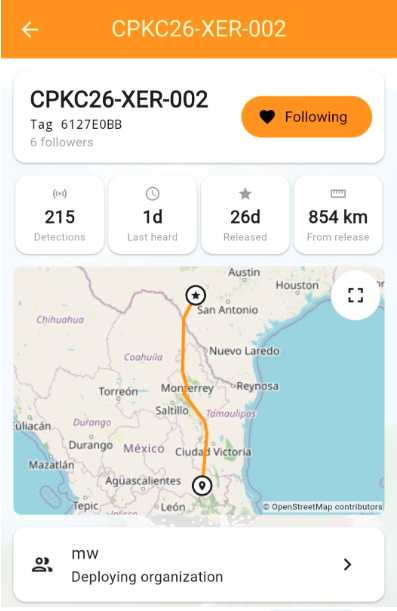
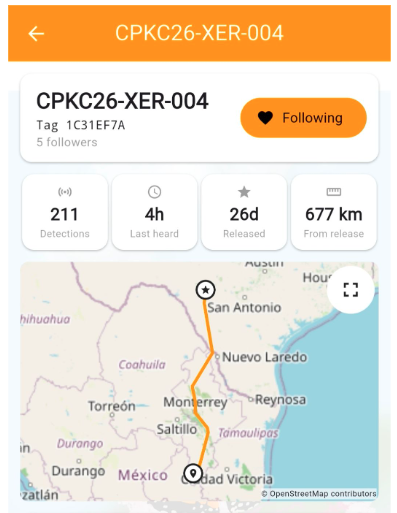
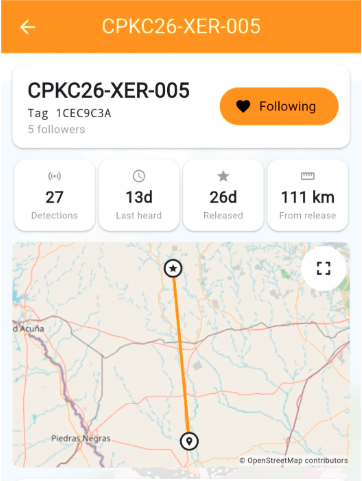
As November is a peak time for Monarch Butterfly migration, we wanted to take this opportunity to share an international butterfly conservation effort on which we’re currently partnering. In collaboration with Monarch Watch, USDA Natural Resources Conservation Service, CPKC transnational railway, and The Xerces Society for Invertebrate Conservation, we’re working with Katie Harris, Ph.D. to capture, tag, and release Monarch butterflies at both Shield Ranch Barton Creek and Shield Ranch Camp Wood.
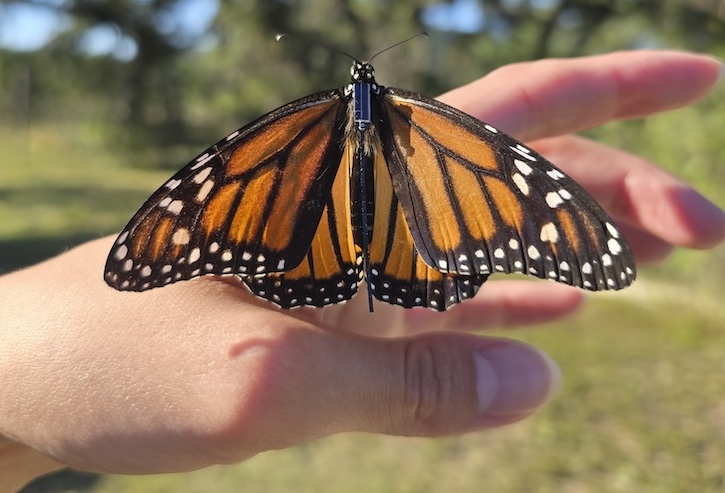
The project is coordinated and delicate, as we placed radio tags on monarch butterflies in the second half of October to further research efforts collecting migration data on their journey to overwintering grounds in Mexico. This included netting and transporting monarchs, gathering body condition and OE (Ophryocystis elektroscirrha) infection status data, radio tag placement, and release.
After Dr. Harris trained several members of the Shield Land Stewardship Group, we successfully tracked 5 of the monarchs migrating south—with at least three males confirmed passing into Mexico!
Per the Xerces Society: “Invertebrates are important parts of food chains, feeding creatures like salmon, bears, and birds. Invertebrates also provide key services like pollinating wildflowers and crops, maintaining water quality, and keeping pest populations under control. All of this and more is why we refer to the work of conserving invertebrates as ‘protecting the life that sustains us.'”
More broadly, pollinators, including bees, flies, beetles and moths, help in the production of nearly 75 percent of crops and roughly 80 percent of all flowering plants. This is why we’re so committed to conserving and expanding habitats across the Shield Ranch wildlands.
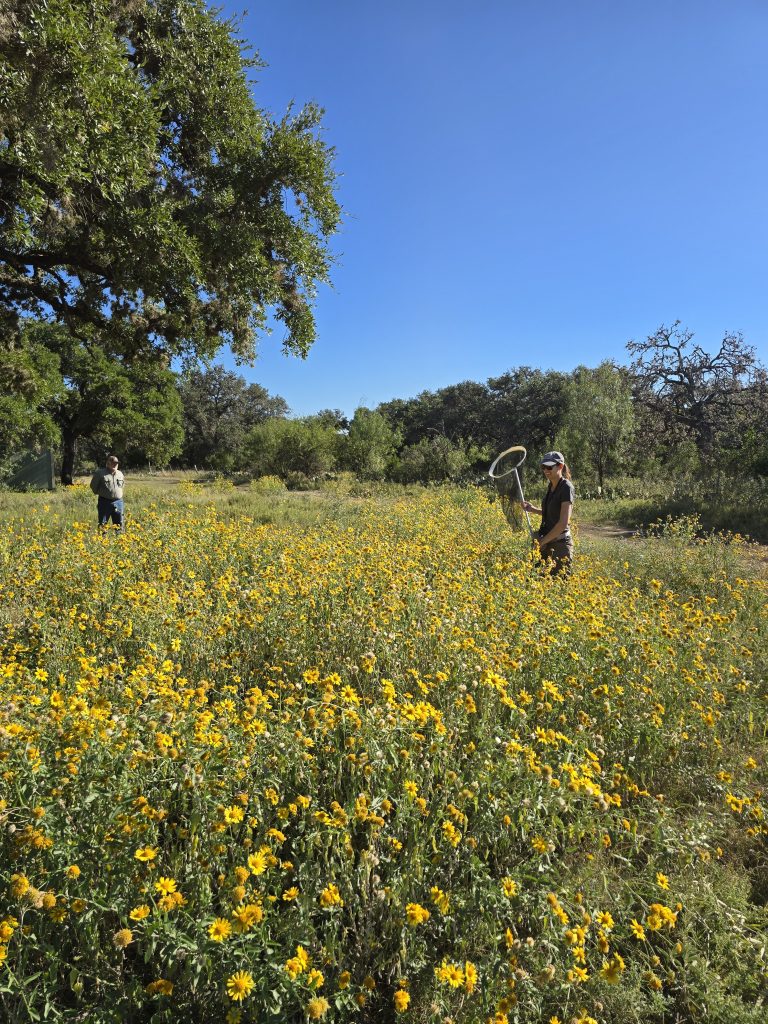
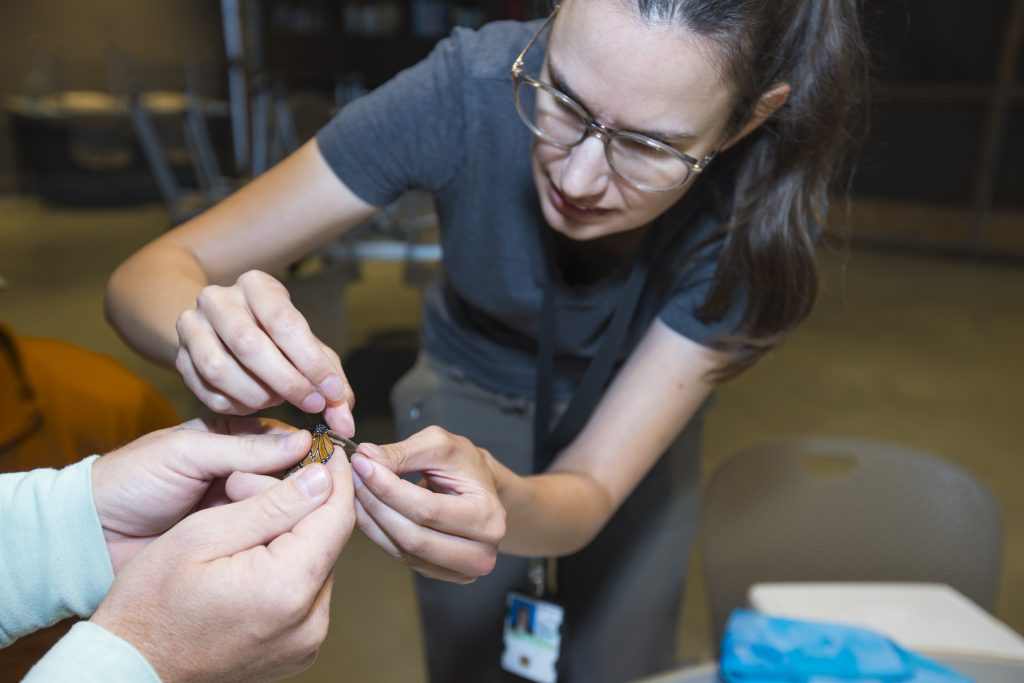
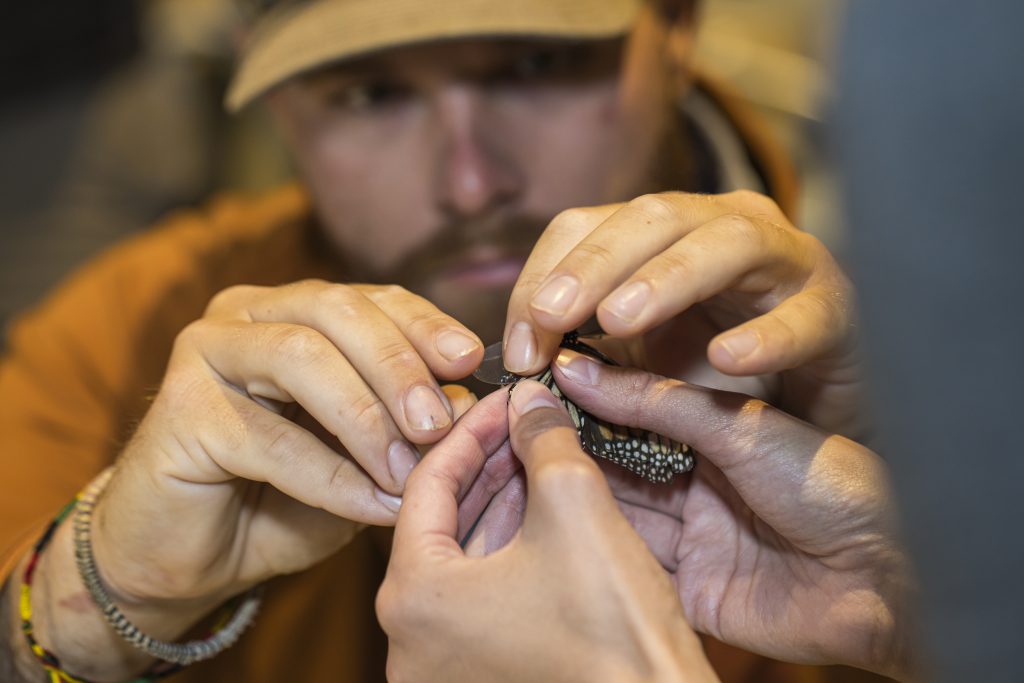
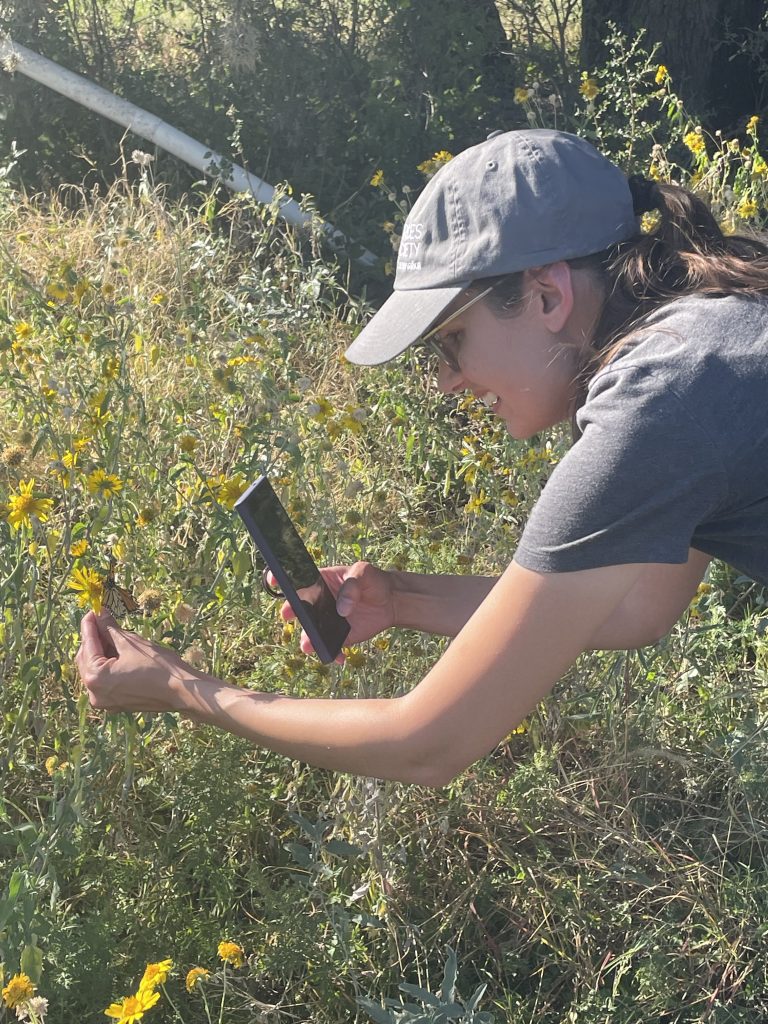
We asked the project’s experts Katie Harris, Ph.D. (Pollinator Conservation Specialist and NRCS Partner Biologist) and our own Director of Land Stewardship, Grant Lawrence to discuss why these habitats across Shield Ranch’s wildlands are so important to monarch conservation:
What do people misunderstand about what pollinators do for the ecosystem?
Katie: A common misconception is that bees are the only pollinators. Although native bees, such as bumble bees, are fantastic pollinators, they are far from the only ones! Pollinators include many insects (e.g. butterflies, moths, flies and beetles!) as well as hummingbirds and bats. Pollinator diversity is critical for maintaining a diverse ecosystem. While some plants can be pollinated by many different species, others have specialized relationships with a narrow range of pollinators. If those pollinators decline, suitable replacements may not be available, which could negatively impact the diversity and resiliency of our ecosystems.
Grant: Pollinators come in all shapes and sizes and contribute in unique ways to their environment. Most people don’t understand the high level of impact pollinators have on food production or ecosystem services for the average American. According to the U.S. Fish & Wildlife Service, pollinators contribute over $34 billion annually to U.S. agricultural crops and contribute to more than 80% of flowering plants’ reproductive cycle.
Monarchs, once abundant across North America, are now in decline due to habitat loss, pesticides, and climate change, making their future increasingly uncertain. How does this tracking project help?
Katie: Tracking monarch butterflies through their fall and spring migration provides us with incredibly detailed information on flight paths and timing, details we have not previously been able to learn! This new information will help us directly inform conservation efforts that combat habitat loss by determining where critical locations for monarch resources (wildflower nectar and milkweed) should be established and also inform conservation planting species selections by providing a more nuanced range for optimal bloom time of wildflowers.
One of the highlights of The Project Monarch Collaboration is partnering with other non-profit and government organizations. It is so fun to see so many entities eager to work together, coordinate efforts, and collect as much high quality data as possible to ultimately conserve monarch butterflies.
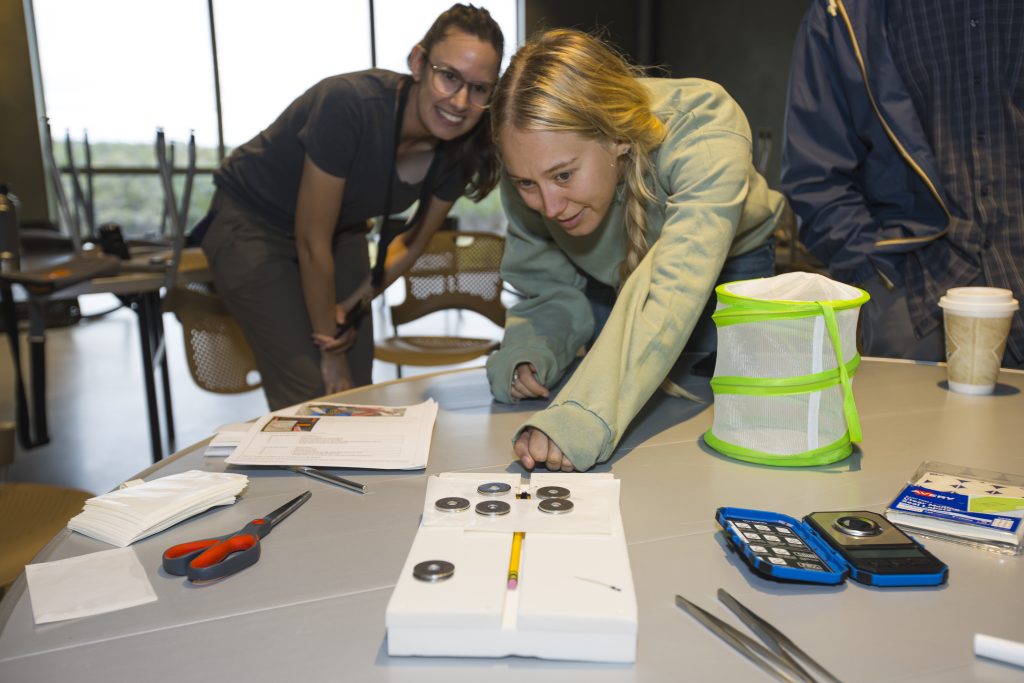
Grant: This advanced method of technology provides real time data on migration routes and travel corridors providing natural resource agencies, private landowners, nonprofit organizations, and policy makers the most current information available to promote and fast track conservation efforts in the most critical habitat zones.
The Project Monarch app gives people a unique opportunity to see the impact they can have by creating pollinator-friendly habitats in their own communities. Users can monitor monarch butterfly activity in their backyards, contribute valuable citizen science data, and follow the butterflies’ remarkable migration journey all the way to Mexico. In my experience, this project resonates across generations and backgrounds. It’s a fun and meaningful way to connect people with conservation and the natural world.
How have land stewardship practices and conservation projects across Shield Ranch been part of the solution for increasing Monarch Butterfly habitats?
Grant: Shield Ranch is committed to promoting native species and their habitat, this includes pollinators! We actively pursue conservation focused projects to support ecosystem health including: prescribed burns, strategic brush management, native restoration projects, and more. We’ve recently partnered with NRCS and Xerces Society to serve as a pilot site for a new pollinator specific demonstration plot.
Caring for the land is important, but you have to find ways to connect people with nature to help move the needle on conservation. Over the past three years, The Campsite at Shield Ranch has partnered with Capitol Area Chapter of Texas Master Naturalists to install a 18,000 sq ft pollinator garden with over 870 plants designed to benefit local pollinator species. This pollinator utopia was provided in part with funding from H-E-B’s Pollinators for Texas grant and the Malcom C. Damuth Foundation. This native space helps promote education and outreach to all guests regarding the significance that pollinators play within our ecosystem and wildland urban interface.
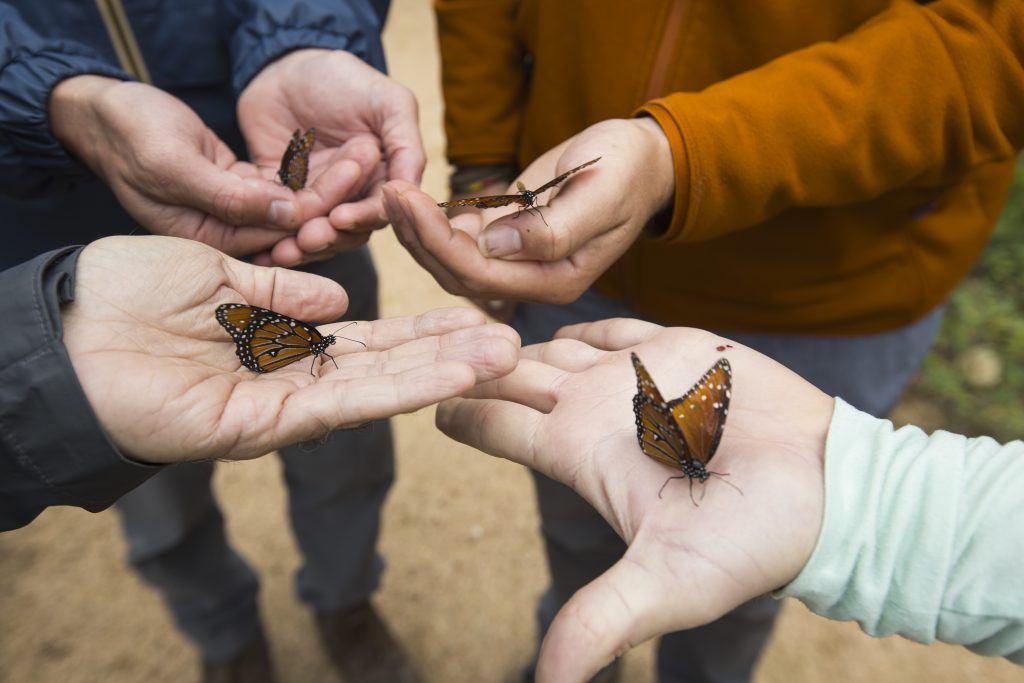
What else should people know about how they help around their own homes and workplaces as well as other ways to support this work?
Katie: Community members can contribute to monarch conservation by planting and promoting the use of native species, particularly those that support native pollinators. Plants for Monarchs is a great resource to identify and locate native plants matched to your area that benefit monarch butterflies. Milkweed is a critical food source for monarch caterpillars and is important throughout Texas during spring migration and breeding. Nectar is the key resource that adult butterflies require to fuel their flight, meaning monarchs require flower nectar during both the spring and fall migration time periods through Texas. During the fall migration, monarchs will also use flower nectar to store lipids for overwintering!
Limiting the use of pesticides is another important step to helping conserve beneficial insects like monarchs. Xerces has a number of pesticide guides that cover topics ranging from talking to your neighbors about pesticides to managing mosquitoes. Helping limit exposure to our tiny friends will make a very large difference!
Grant: Dr. Harris is the expert here, but I can share that regarding planting, I always recommend choosing native species over ornamental. Consider a diverse landscape with blooms throughout the year and remember that pollinators have other needs as well. Pristine yards rarely equate to pollinator heaven. Leaf litter is an essential component of many insects’ life cycles. For more tips, Texas Parks and Wildlife created this useful guide.
Track the migrations of Project Monarch at Shield Ranch by… using the Project Monarch Science App (App Store / Google Play), you can search for and “follow” individual monarchs. In the app you can select “data” along the bottom toolbar and search for these released monarchs by entering their unique codes (CPKC26-XER-001 through -005). Once selected, click “follow” in the upper right hand corner of the screen. You can enable notifications if you want to be alerted to each monarch’s movement!
Here is a great resource for general information on the Project Monarch Collaborative.